Filed under: Eastern Kentucky Flood, Uncategorized, Writing | Tags: Appalachian, Appalachian Writers Workshop, Eastern Kentucky Flood 2022, Floods, Hindman Settlement School, Neighbors
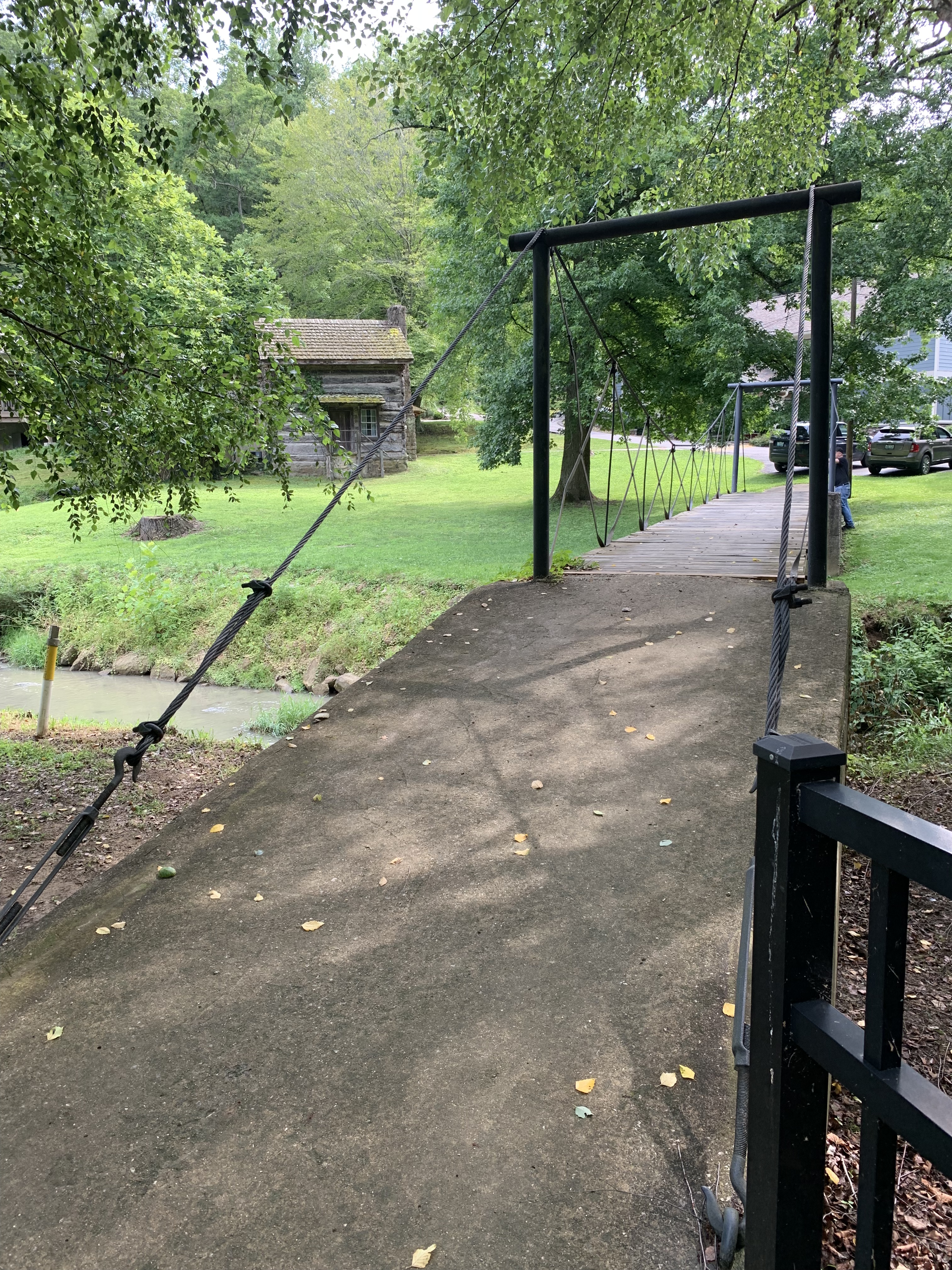
Most summers for the last twelve years you can find me at the Appalachian Writer’s Workshop the last week of July at the Hindman Settlement School on the banks of Troublesome Creek. Like a migrating bird, I cannot help but land at that same place at that same time. I was not born in Appalachia, but I’ve had many rebirths there. As a teenager, long ago, I fell in love with its music, which led me to its literature, then its history, its landscape and its people. I’ve managed to find work there as a teaching artist through the Kentucky Arts Council for months at time in years past, giving me time to learn, time to explore. We often speak of a chosen family, well Appalachia is my chosen home and the fierce, hilarious and talented people at Hindman are part of my family.
The Hindman Settlement School was founded in 1902 by May Stone and Katherine Pettit, educators who were invited by Uncle Sol Evridge to build a school on his land for the benefit of his young ones and his community. There were no real roads, the creeks and streams were your highways. There were few schools and they were far away, hard to get to. This was a truth all over Appalachia. The hills and mountains rise fast and steep, there isn’t much bottomland to build on or to farm. Farmers joked that they scrape their noses on the rocks as they plant their uphill farms. Uncle Sol had a vision- To make a better life for his descendants. He walked more than 100 miles to mail a transcribed letter to Katherine Pettit and May Stone to convince them to start the School. And they came. With the help and support of the people in the community and with help from outside donors, they were able to build a school with houses for boarders, barns for livestock, gardens to grow their own food. They built right beside Uncle Sol’s Cabin which still stands today- a one room log house built sometime in the late 1700’s or early 1800’s.
The School has come a long way since it began. No longer a boarding school, it serves Knott County and beyond through its dyslexia programs, the teaching of traditional folk arts, its burgeoning foodways program that is bringing small farming back into the region and it has been the center of Appalachian literature almost from the beginning. Kentucky treasures Harriet Arnow, Albert Stewart, Jim Wayne Miller and James Still began the annual writers workshop. James Still is buried on the hillside by the Chapel. Writers gather every summer and at times throughout the year to work on their craft, soak up fellowship and to teach each other.

It’s a gorgeous place, a sacred place. Generations of people have made it so. When you are there, you feel that anything is possible and what you have to say matters. When you cross the bridge over Troublesome Creek, you are home.
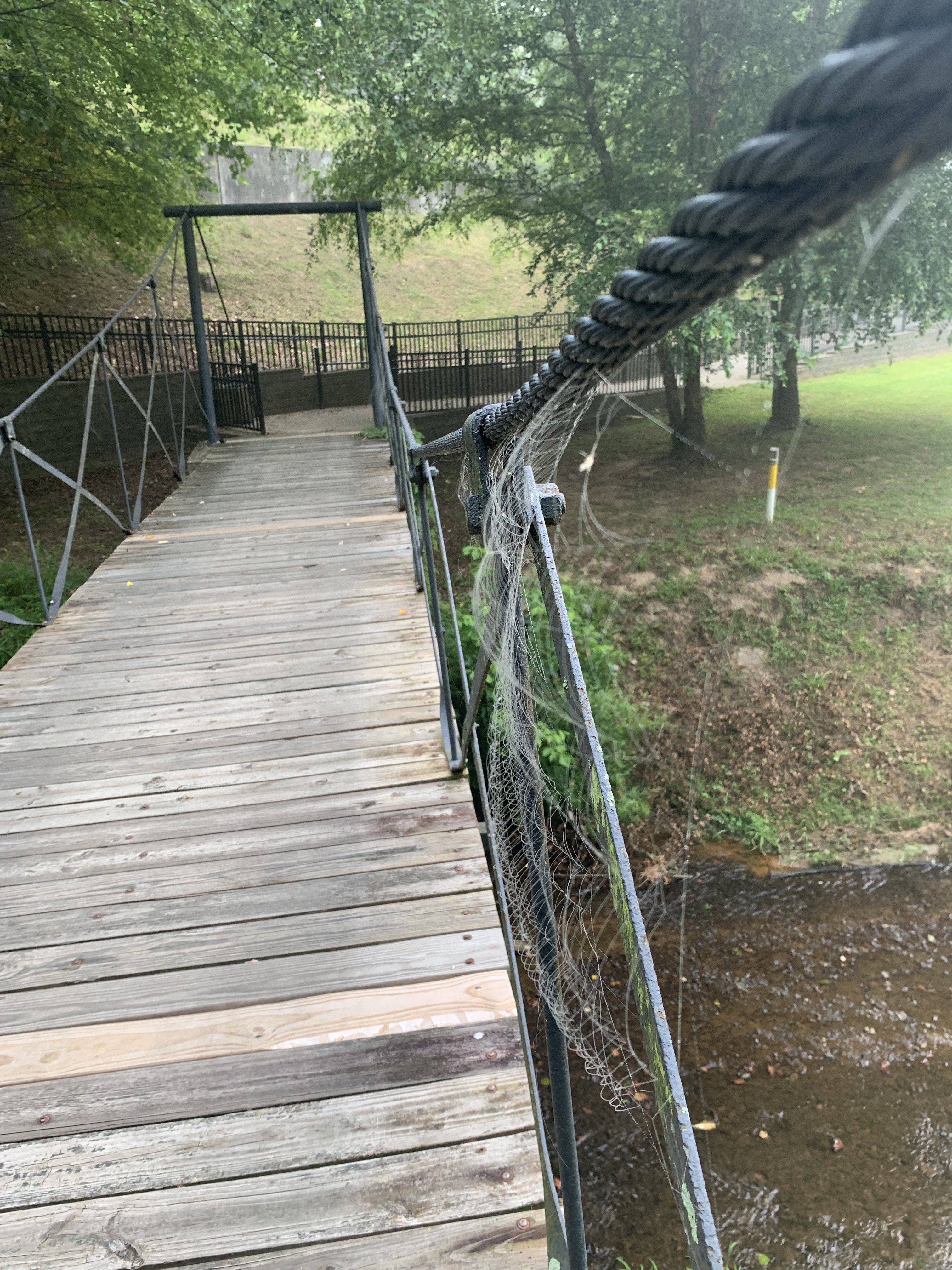
Troublesome Creek. It’s a long long creek, with a couple of branches that meet in downtown Hindman, the county seat with one traffic light close to the school. It eventually flows into the North Fork of the Kentucky River and then on into the Ohio. It’s just a little creek. Sometimes the creek goes dry even. Sometimes it rises fiercely and escapes its steep banks. You can tell it’s a troublesome creek by those steep banks, cut by erosion which is a longtime problem in Appalachia. Logging and mountaintop removal have destabilized the area, making it prone to flash floods. They are a common occurrence, part of life. People know how to live with them, at least they thought they did.

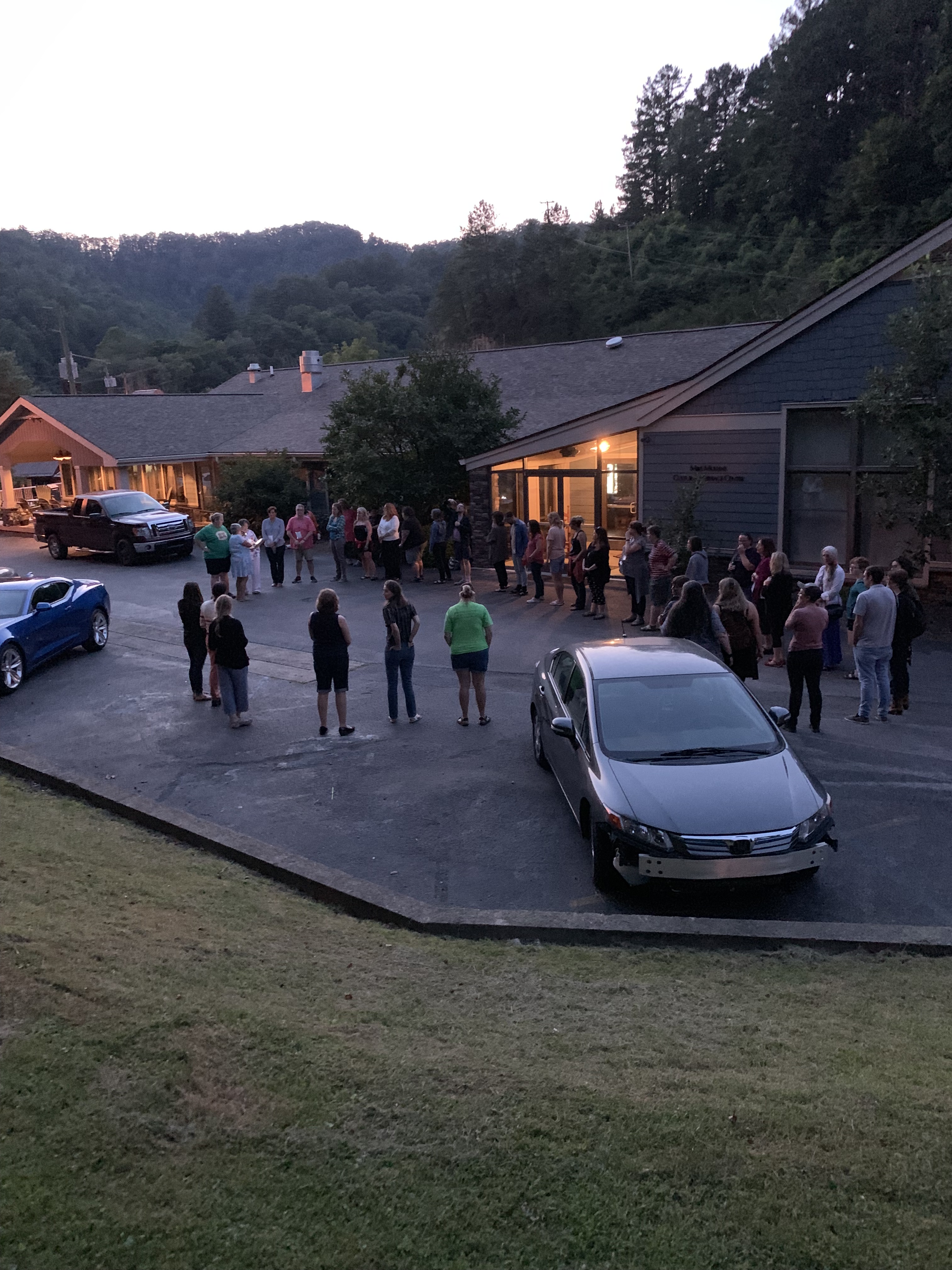
July 28th, I was at the Appalachian Writer’s workshop when the flood came. We were halfway through our blessed week. It had rained a lot and we could see that Troublesome was rising a bit, one foot, two feet, well within its banks. Wednesday was a great day- classes, communal meals, evening faculty readings and a trivia game night. Alerts for flash floods came across our phones, you know, the ones we all have learned to disregard. But that afternoon I told my roommate that I thought she should move her car away from the creek side of the main building. Mine was already on a higher spot. Really? She said. Yeah. Just in case. So she did, finding one last spot by mine. It rained hard all evening through our programs and socializing. It had been such a great day, I had trouble falling asleep. It was midnight when I did. At about 2:30 there was loud knocking and urgent voices, something about moving cars if they were on the low side. I stumbled to the hall, heard them say that Troublesome was rising fast. I went to the bathroom and flicked on the light, only there was no light. The electricity was gone. There was this roaring sound I couldn’t place- I shone my phone light out the bathroom window and could see that the usually bone dry little channel beside our residence, called Stucky House, was a white water torrent of water pouring down from the hillsides into Troublesome. DO something, do something. I started filling all the empty gallon containers in the kitchen from the tap in case we’d soon be without safe water. I filled the bathtub. It was all I could think to do.
The rain pounded, lightning flashed. More and more people were waking up, some heading to their cars. Josh Mullins, Hindman program director was soaked, the other Hindman staff too- all going to and fro trying to make sure that folks in the lower apartments were out. Former Kentucky Poet Laureate George Ella Lyon was in one of those apartments with poet Nickole Brown who had a hunch the world was about to explode. She didn’t go to sleep, but packed up her things at midnight and kept watch over the creek. It started rising so rapidly that by the time she alerted George Ella and helped her pack, water was coming through their door. They landed up at Stuckey, which became the refuge for all the Hindman folks in precarious lodgings. I grabbed my keys and moved my car even further up- driving up the little road that wends its way up past Stucky to the highest house on campus, others followed. People were crying, some had already lost their cars, their trucks, Tamela’s brand new dream BMX motorcycle- they had moved too late. That little tiny creek had risen impossibly fast, higher than anyone had ever seen. Some people stayed inside the living room together, some in their rooms, some on the front porch waiting for the glimpse of the creek that the lightning would give us. It’s over the bridge now, no way out or in. Josh and his team were down in the MIke Mullins Center, trying to pull things to safety from the downstairs offices- the computers, the archives. Josh could see that the creek was up against the new plate glass windows. He was thankful they had put in steel doors when suddenly the creek busted them wide open and all of Troublesome poured in. They got upstairs safely and out the second floor exit.
Emergency lights in Stucky gave us some dim light, there were some emergency lights on the outside of the Mullins Building. There were four white domestic ducks trying to get into a door, a window, anything. They moved as a frantic little group, they had been washed out of the home. There was an overpowering smell of gasoline, underground tanks had been ruptured and the creek was full of gas and propane and oil. It smelled like it could catch fire at any moment.
There was one member of the Hindman staff unaccounted for. Corey, his wife and three young daughters, lived across the creek in a sweet little house. The last anyone had heard, they were trying to get to a neighbor higher up, but they didn’t seem to be home. Their home was flooded and Corey’s wife had fallen and had broken her leg. Then we heard nothing. Phones weren’t working, cell towers were down. All night we huddled on the porch or in the living room, unable to believe what we were seeing. Unable to do anything to help. About 40 people, three dogs and two cats had found refuge at Stucky.
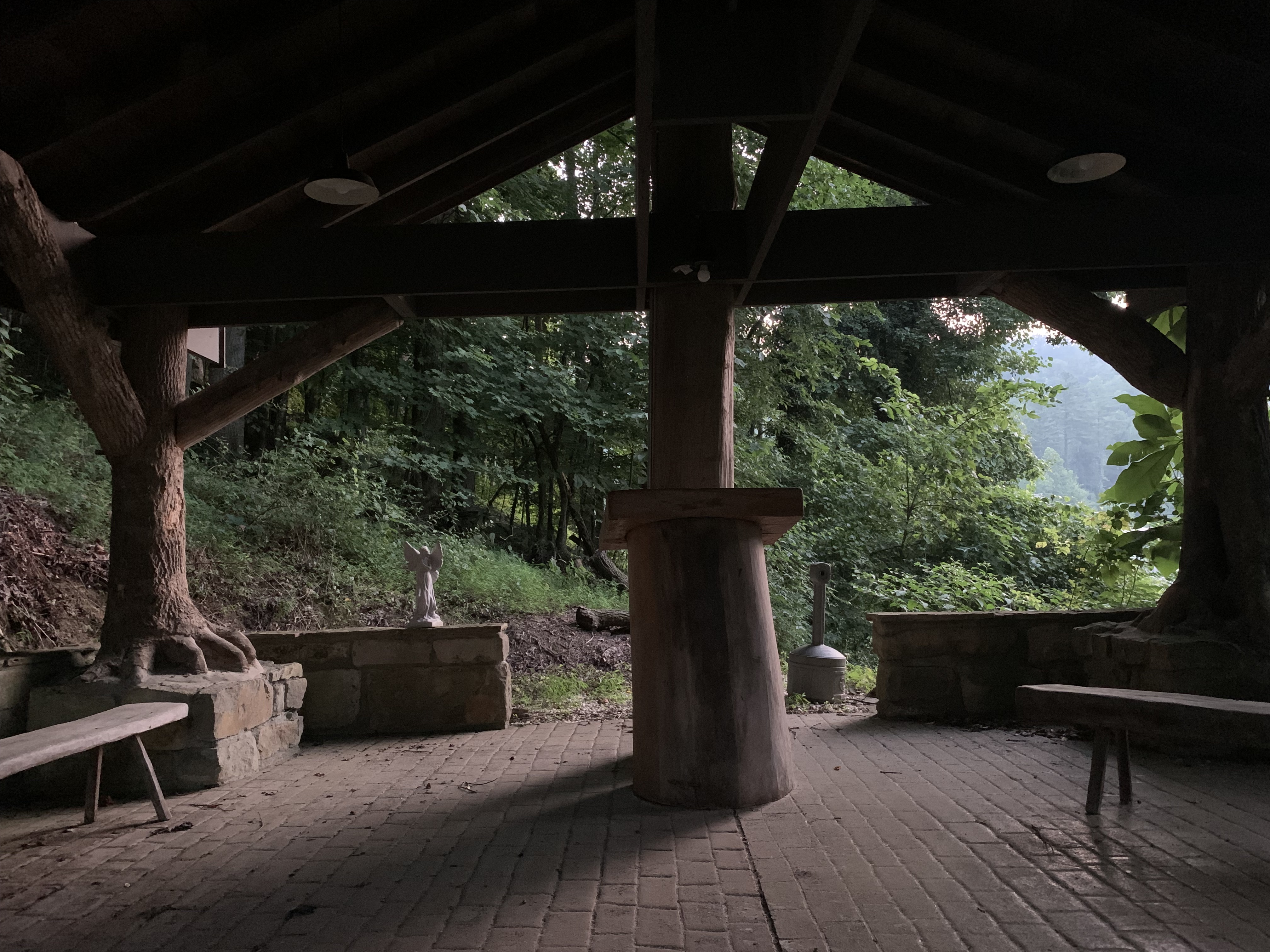
When the sky finally began to lighten at about 6:30, I grabbed my umbrella and walked over to the chapel with my friends Tia Jensen and Carter Sickels to see what we could see. From the chapel by the graves of James Still and Elizabeth Watts, you can see down to the creek, the health department and across to downtown Hindman. This is what we saw-

It was about 7am when I saw Corey walk up the hill to his colleagues. He was soaked and muddy, but smiling. Thank god. They all burst into tears and hugged him over and over. ‘I thought you were dead, I thought you were dead.’ They were all safe, but had lost their house, their cars. Corey’s wife needed medical attention badly. He was trying to get her to a hospital, was looking for a vehicle and hoped there was a way to get through the roads.
The water dropped quickly- faster than I thought possible. In a few hours it had dropped 10 feet or more. I felt sure it rose over 20 feet that night, later measurements showed this was correct.
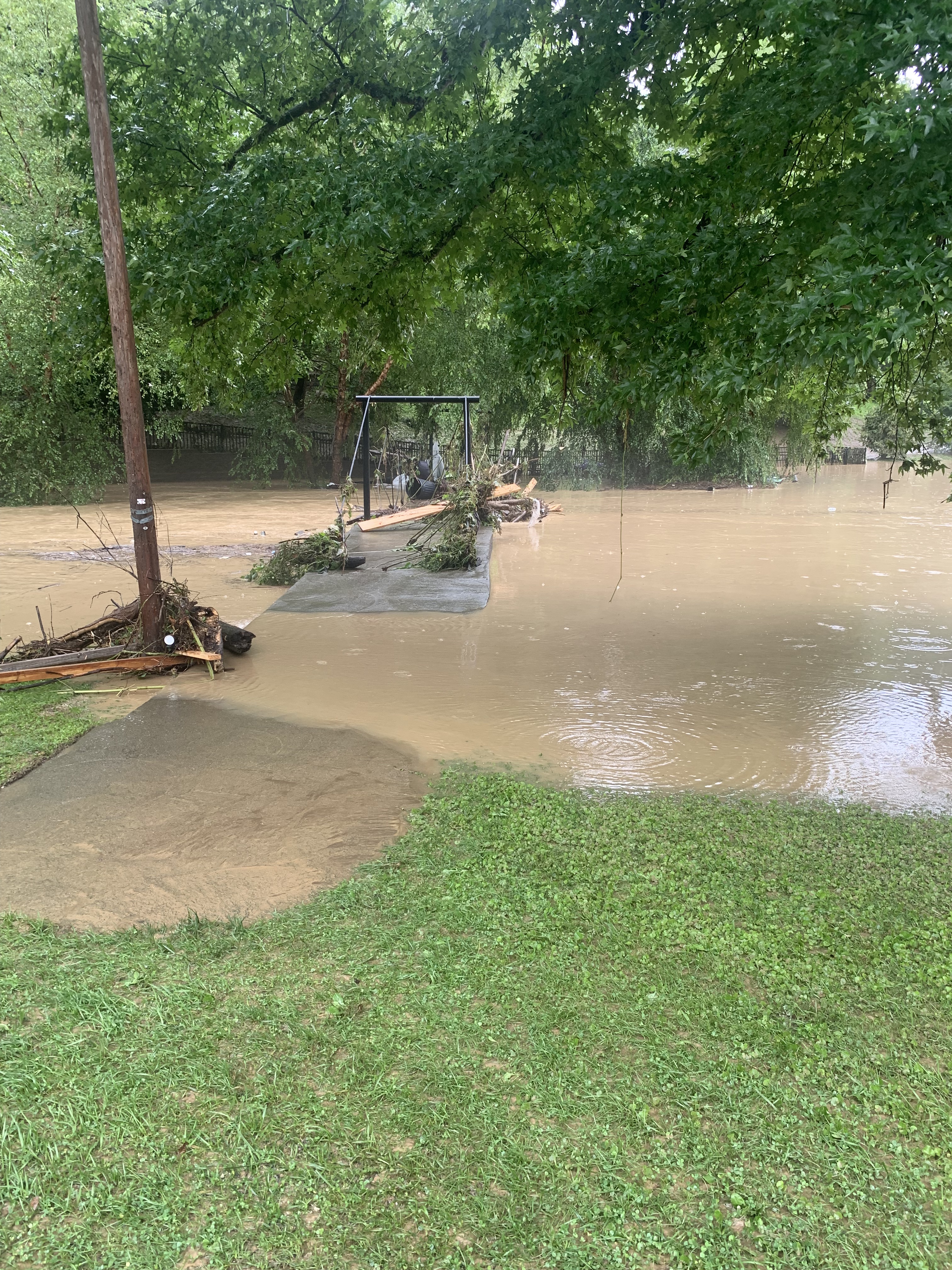
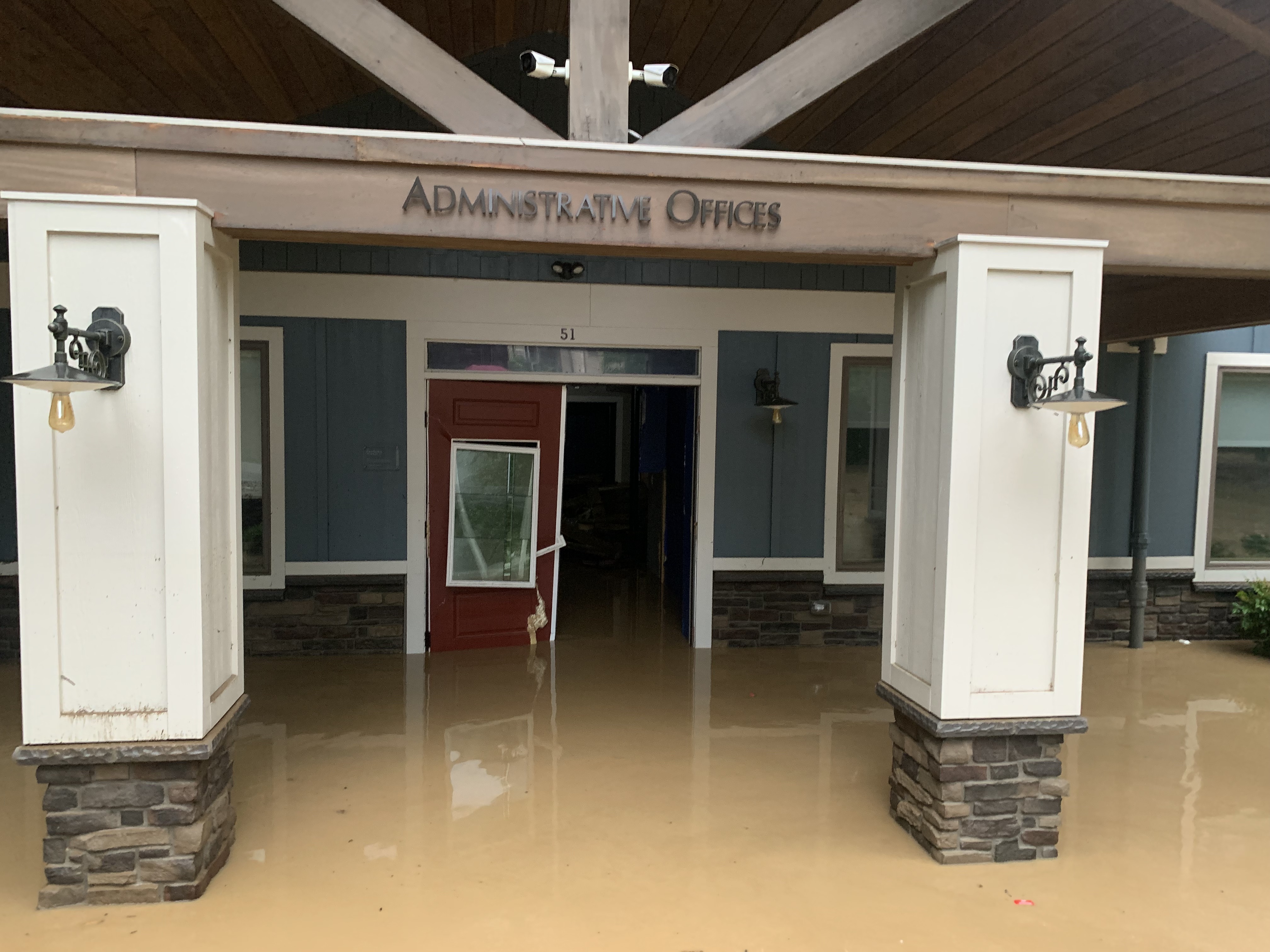
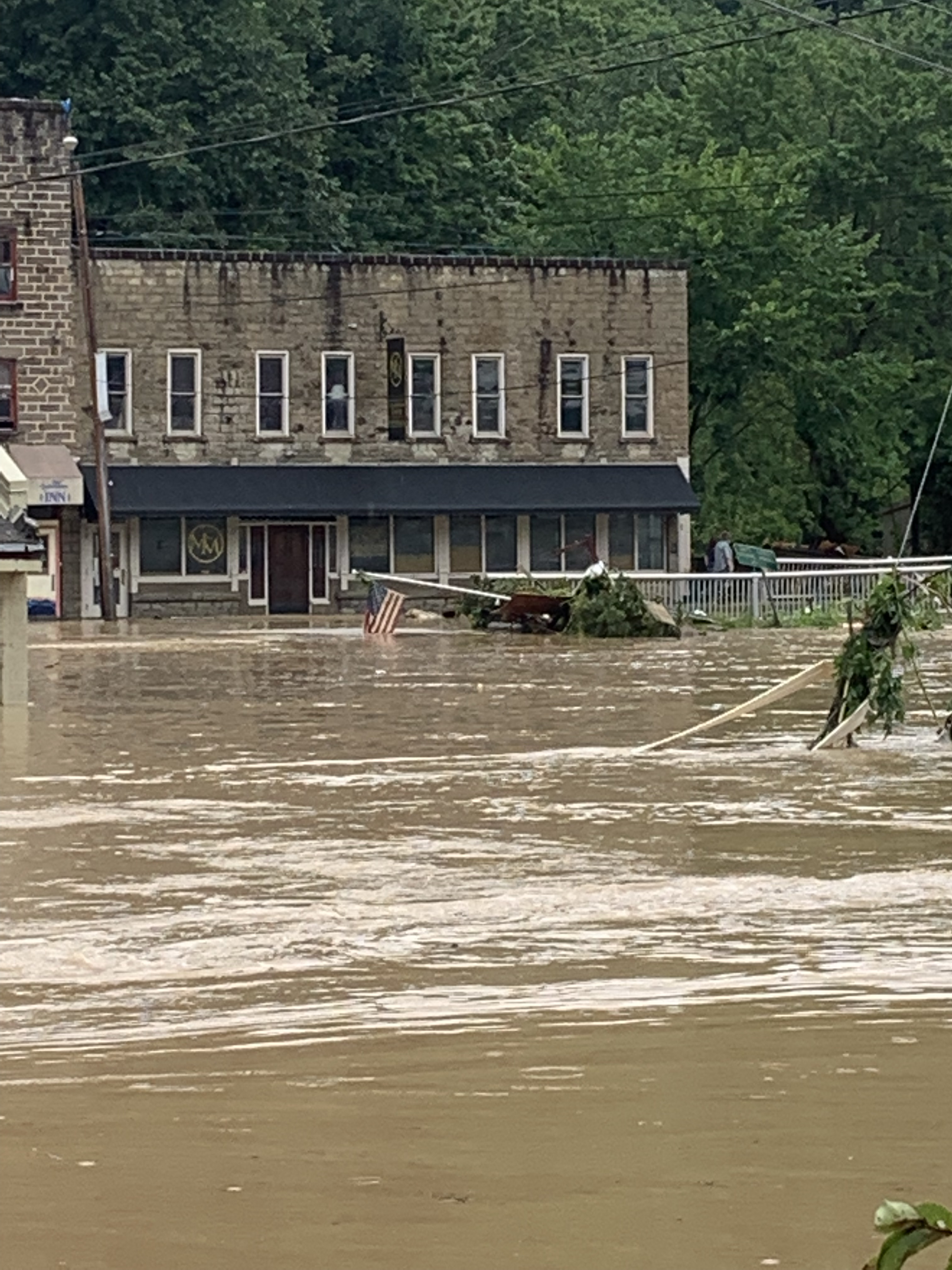
All of us were numb, in shock really. Some cried, others figured out where to stand to get cell service to call their insurance agents. The smell in the air was noxious- some gaseous bi-product that no one should be breathing. No one knew what to do. We workshop folks knew we were going to be in the way- there was no safe water, no electricity, food was quickly going to be a problem. We knew we had to leave, though we could get no information about what roads were closed, what was open. More rains were forecast and who knew if we would be cut off again. There was a window for leaving and we just hoped for the best. People who had lost their cars were taken home by those who still had them. It took all of us a long time to navigate the way out- turning back when a road was washed out, finding another way.
I drove around someone’s home smeared all over the road. It went from life to litter in an hour.

Our part of Troublesome creek rose like that in the middle of the night, in the dark. What is hard to comprehend is that ALL creeks and streams rose like that across 12-13 counties. It’s unimaginable. Truly. So many homes lie alongside the creeks and rivers- there is nowhere else to build. So many communities nestled down in the hollers were scrubbed out by the roaring waters.
We were lucky, us workshop folks. We had homes that were safe and sound, waiting for us on higher ground. Many thousands did not, having now only the clothes they were wearing. And they lost not only their homes, but their neighborhoods, their roads, bridges, grocery stores, churches, businesses, schools. Outside looking in, you’d say they lost their communities, but you’d be wrong. Appalachian people are uncommonly resourceful, resilient and loyal- That is what a Hillbilly is in reality. They’ve had to be. They’ve never been able to count on outside help, only outside exploitation. So they help themselves and each other. I do not discount the heroic and swift efforts of the National Guard who were able to pull over 700 people off their rooftops, but it was neighbors who saved thousands more- wading chest deep into dark houses to get their older or disabled friends to safety, who paddled up in kayaks, canoes, john boats, rafts to get their neighbors off their roofs, who tied each other to trees to keep from getting swept away. It’s neighbors who are now mucking out each other’s house, building their debris piles, sharing their food, water, clothing, anything they have. The restoration work will take years, and it may well happen again. Hydrologists have estimated that water runoff in the area is now 1000 times worse thanks to strip mining and mountaintop removal, and the heavier rains of climate change make this a real and terrible threat.
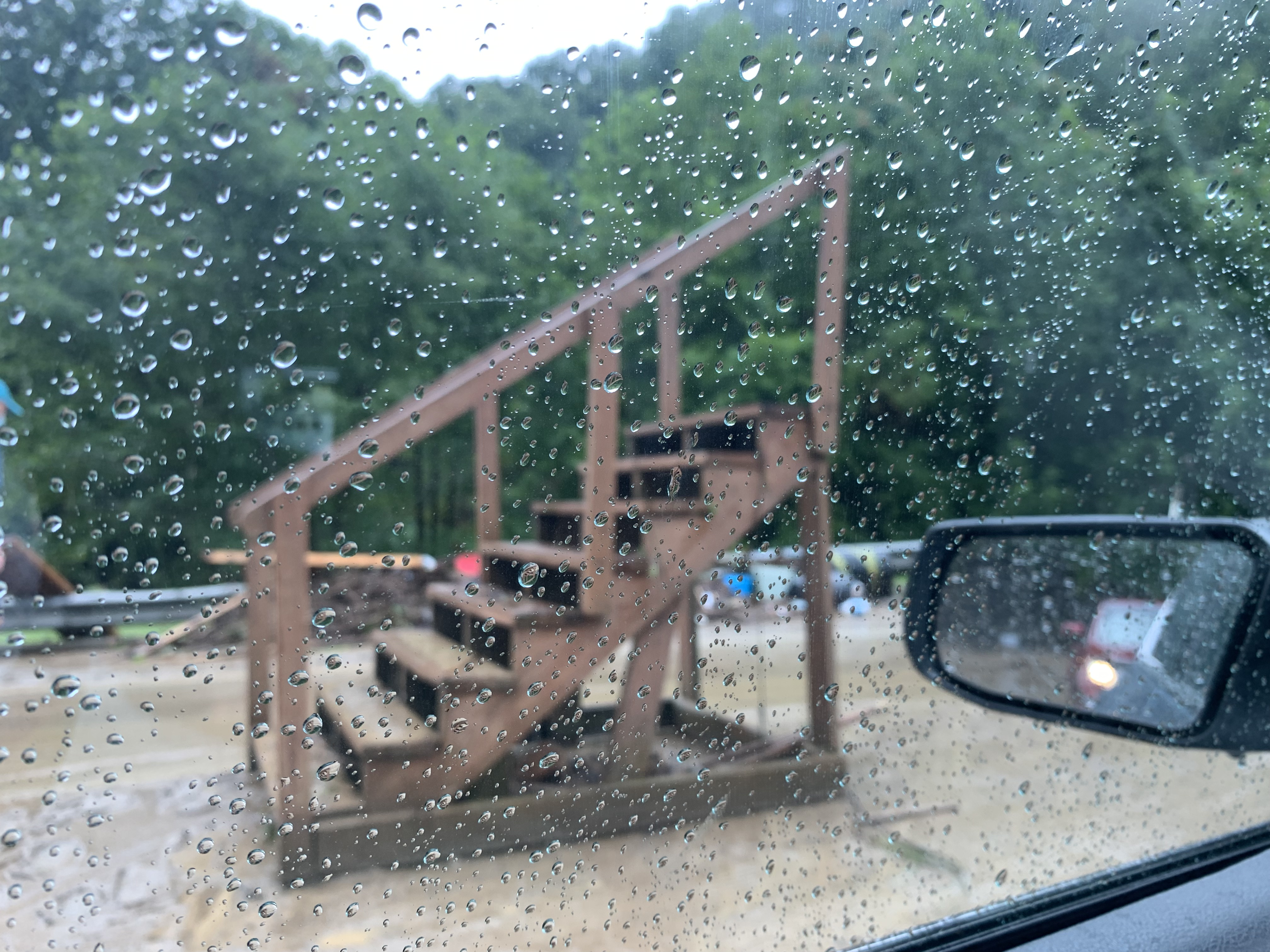
The very morning that Hindman Settlement School woke to its own loss, they pivoted to become a shelter for others, a center for supplies. They scrambled to find grills and found a way to provide three hot meals a day to the community, even as they were trying to save their collection of instruments and their precious archives, a legacy of Appalachian culture. All over Appalachia, this is happening- people coming together to help each other, a true Water Communion, an ingathering of love and care.
Those of us standing on higher ground have the opportunity of joining this ingathering, of saying “We are your neighbors and we want to help”. That so many people are doing just this, gives me hope. But it’s been over a month now and folks are starting to forget, the news cycle has roared on. I’m writing this now to remind myself, and anyone who will read it, that the flood is not over. Many are living in tents on contaminated ground, others are living in FEMA trailers parked on unreclaimed strip jobs, roasting in the sun, no shade, no way into town, no schools for the children who have nothing else either. It’s time to build schools, homes, businesses. It’s time to build bridges.
To help Hindman Settlement School check out their website: https://hindman.org/
To help rebuild schools, check out Buckhorn and Robinson Elementary in Perry County:
To help rebuild LIbraries check out Letcher County Public Library:
Look at the amazing folks at Eastern KY Mutual Aid Group who brilliantly get money and needed goods directly into the hands of people who need help. It’s neighbors helping Neighbors, but they can use the help of neighbors farther afield. Check out their Facebook Group: https://www.facebook.com/groups/2557126217948530
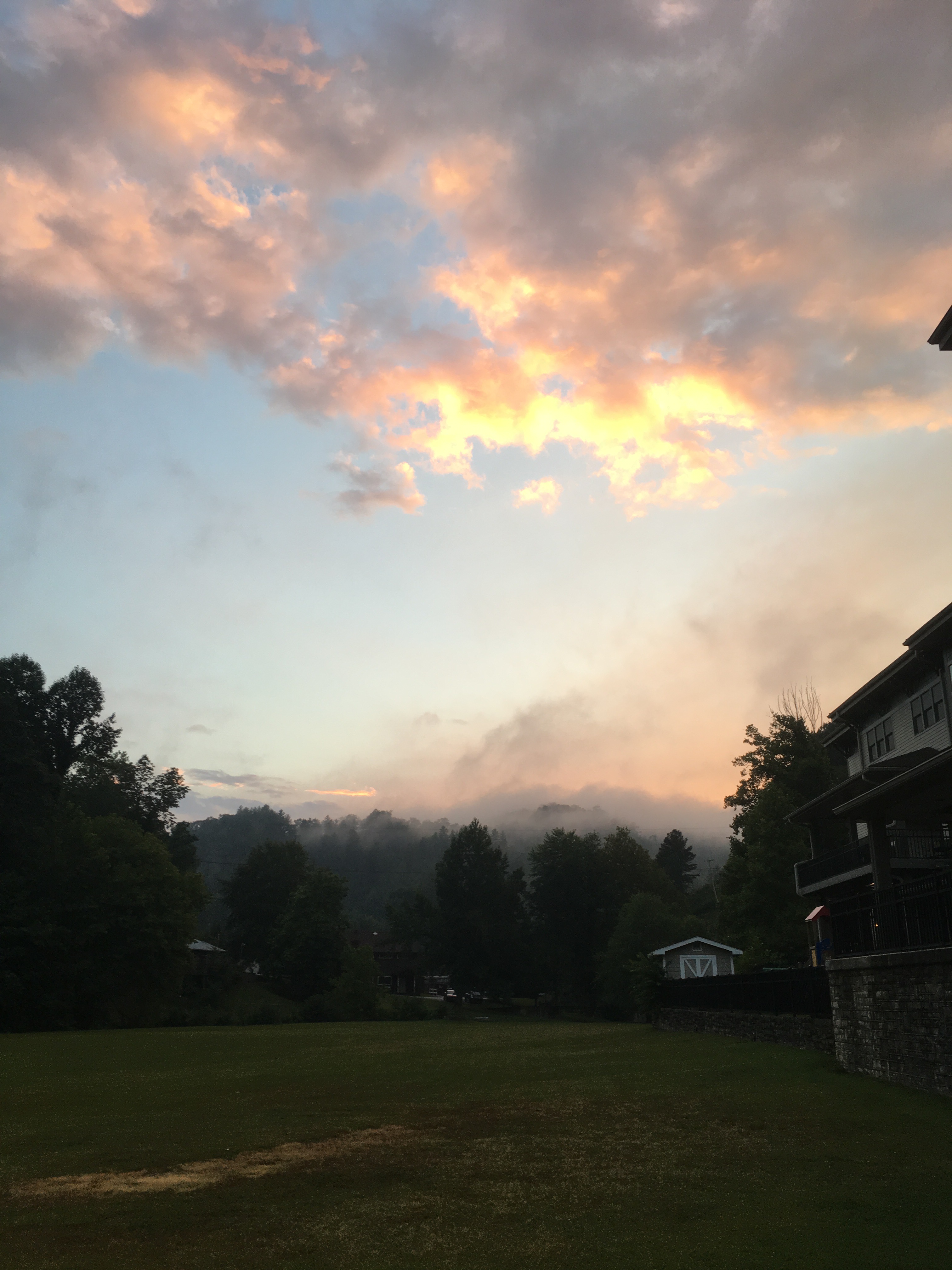
Filed under: Art of the Day, Uncategorized, Writing | Tags: Adriana Trigiani, Appalachian Writers Workshop, George Ella Lyon, Hindman Settlement School, Making Art during the Pandemic, poetry, Writing
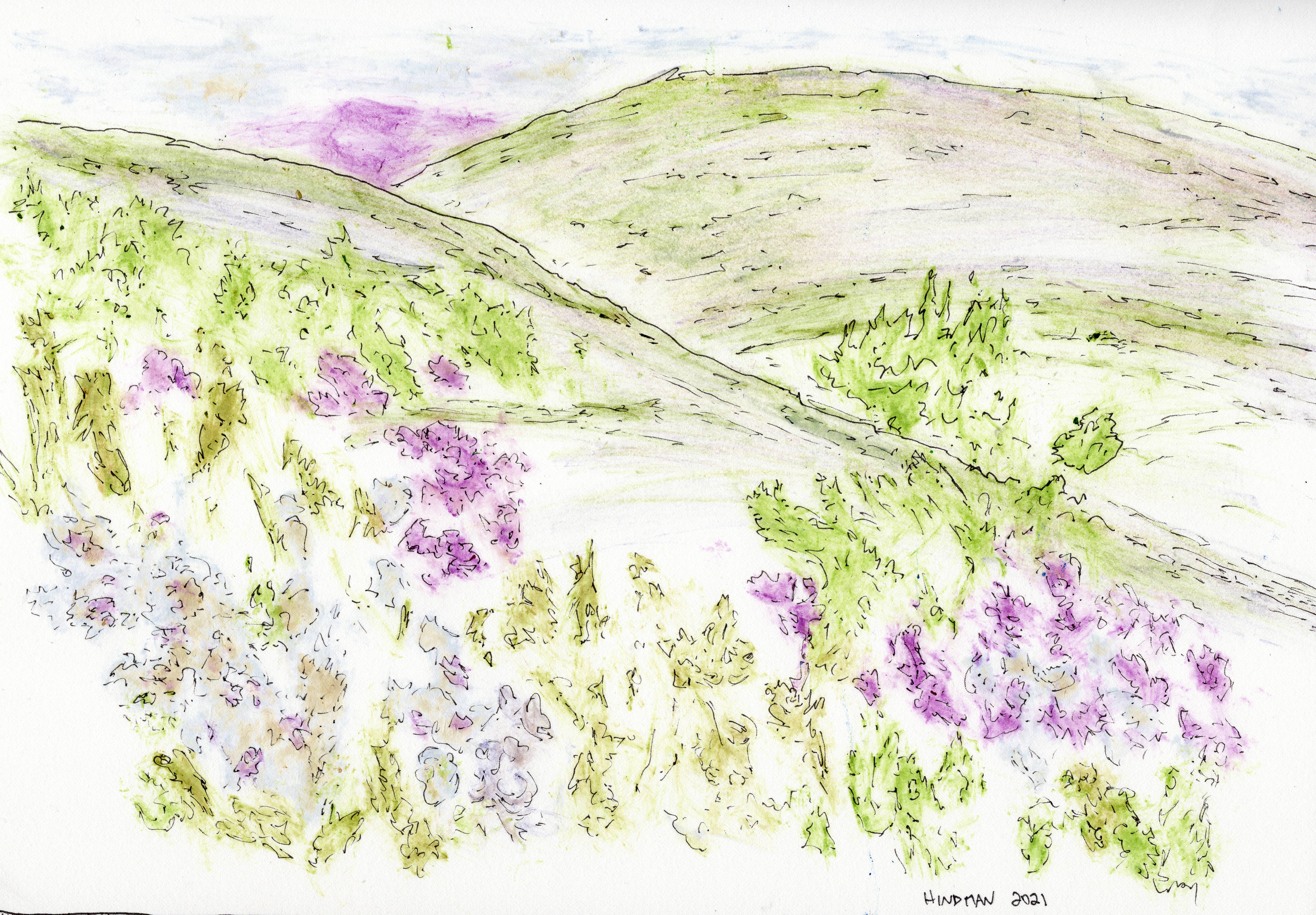
“You gotta make the work sacred,
because it happens to be sacred.”
-Adriana Trigiani
Adriana Trigiani was the keynote speaker for the Appalachian Writer’s Workshop at Hindman Settlement School this year. On Zoom she was powerful, intimate, dynamic, funny, full of respect and truth. I’d want her in my corner when I’m on the ropes. She’d find a way to get me up and fighting again.
Here’s the struggle- for one almost whole week I had the great gift of being at the writer’s workshop there at Hindman where all my needs were met- really delicious food (dessert with every meal!), a lovely room, inspiring and generous teachers, trails to explore, quiet places to sit and think, a beautiful campus rich with history, and a community of old and new friends all working to shine some light in this world. All week we were surrounded by beauty and art and heritage. We were in a place that has a long history of lifting people up. It is sacred ground, truly. And now I’m home.

Last year I attended the workshop online along with everyone else. Hindman did a great job with it, but we all felt the loss. At home, I tried hard to make the time sacred and for moments I could fool myself that I was there, lose myself in the readings, the discussions, the sharing. Just hearing everyone’s voice was enough to keep me afloat. But there was always the moment of hollowness when the Zoom screen disappeared and there I was sitting alone at home about 30 seconds away from having to take care of something or someone. I remember sitting there feeling like all the water just drained out of the tub. It was heavy work hauling myself out and putting myself into motion again. I do not think I was alone in feeling this. I know I wasn’t. And I know that those who attended online again this year felt it again, even more so. It just hurts.

Lucky, so lucky to be there this year. It was an oasis I badly needed, an oasis I hated to leave. The degree to which I am mourning it shocks me- do I really dislike my life so much? The one I made all by myself over all these years? Of course not. But there are so many things I dread and even despise about what everyone agrees is the necessary business of life. Not so long ago I wrote in my journal that as I lay dying (someday far far from now) that I will toss bouquets to heaven, rejoicing that I will no longer have to fill out financial aid forms, file taxes, pay bills, navigate mortgage refinancing, fight property valuation increases, rob Peter to pay Paul. ‘Hallelujah!’ I will shout- or gasp, or whisper or maybe just think- ‘I can just be me again!’
That’s what it felt like this last week. I was just me. Not responsible for anyone else. I am amazed at how little I thought of my family, those I’ve lost, even my daughter who is everything to me. I forgot all week that I was a mother, a daughter, a teacher, an employee, a homeowner, all of it. I allowed myself to simply be. I didn’t have to justify the time I spent reading, writing, listening, making art, exploring or simply looking out into the distance for long periods of time. I mean justify it to myself because it’s mostly me looking over my own shoulder saying ‘don’t forget you have to… remember to… it’s been a long time since you… you really ought to- clean, cook, shop, weed whack, visit, call, pay, plan, work your two jobs since that is what pays you.’
I am not alone or unique. It is what many experienced at the workshop. This glorious week and then we go home floating high with what we have learned, experienced, created. And there are our lives waiting for us to pick up the reins again. How do artists, writers, dreamers keep it all going? Those dear mothers of small children have an especially hard time because finding time to write feels like stealing time from your babies. Say what you want, that’s what it feels like and how can anything beautiful come from what is stolen? I remember well that precious, tender, terrible time. We talked about this in our last class with the remarkable George Ella Lyon who is a wonder and a gift. She walks us through our own mansions with an enormous keyring at her waist unlocking door after door for us, saying ‘here, did you know you have this room in your house? Now you can come in anytime.’ But on our last day, many of us were despondent- how on earth can I even find that room again once I get home?
I have some thoughts on thresholds and doors you can close. When everything shut down in March 2020, we all went home. It was exciting at first, an adventure, something new. I require solitude, crave quiet. The busy-ness of traveling here and there, being split between my two jobs can be very wearing, so being at home really appealed to me. In some ways life was more peaceful, in other ways it was maddeningly loud inside my head. Suddenly there were no boundaries between work and home, between my two jobs, between my family and my writing life. No thresholds to cross, no journeys to help reset and refocus for the next task at hand. There were no doors to close to keep the outside from coming in and I felt I had to be reachable at all times. Tethered to the computer screen, I worked to figure out how to teach theater online, how to have Sunday school, how to keep children from feeling the way I did- unconnected, unreal, unimportant. Truly maddening.

My office at home isn’t a room exactly, more like an odd-shaped hall at the top of the stairs leading to other rooms, a feng shui nightmare as energy hemorrhages from that space. It’s okay for business type stuff but not for the deep dive needed for writing. I fiddled with spaces all last year- found the best settings for my various zoom classes, rearranged furniture, created a writing space in my bedroom where I actually have a door to close. I designated different desks in the house for different endeavors. I have a ridiculous number of desks, perfect for someone who habitually takes on too much.
So here’s the current line-up:
The Business Desk: At the top of the stairs. It is an office type desk with filing cabinets that I bought at Big Lots ten years ago. It’s for businessy type things, including my work for school or the church.
The Letter Desk: Not six feet away is my childhood dresser desk, a Victorian affair with drawers and a desktop you lower to reveal cubbyholes. For letter writing and my international postcard obsession, for correspondence of any kind that involves paper and pen and the stamps that I love so much.
The Poetry Desk: A small cherry school type desk with a sloped top that I got in a neighborhood second-hand shop. It sits in a window dormer to the right of the Business Desk. It has been largely ignored these last couple of years but it is reasserting its importance.
Lap Desks: I have these two very old pressed cardboard lap desks that I got when I helped my cousin clean out an old relative’s house decades ago now. They have held up remarkably well. They travel out on the patio if it’s nice or beside the fireplace if it’s cold or in the armchair upstairs that looks out into the yard if I want to keep an eye out for the birds and the postman. This is where I do most of my journal and blog writing and my reading.
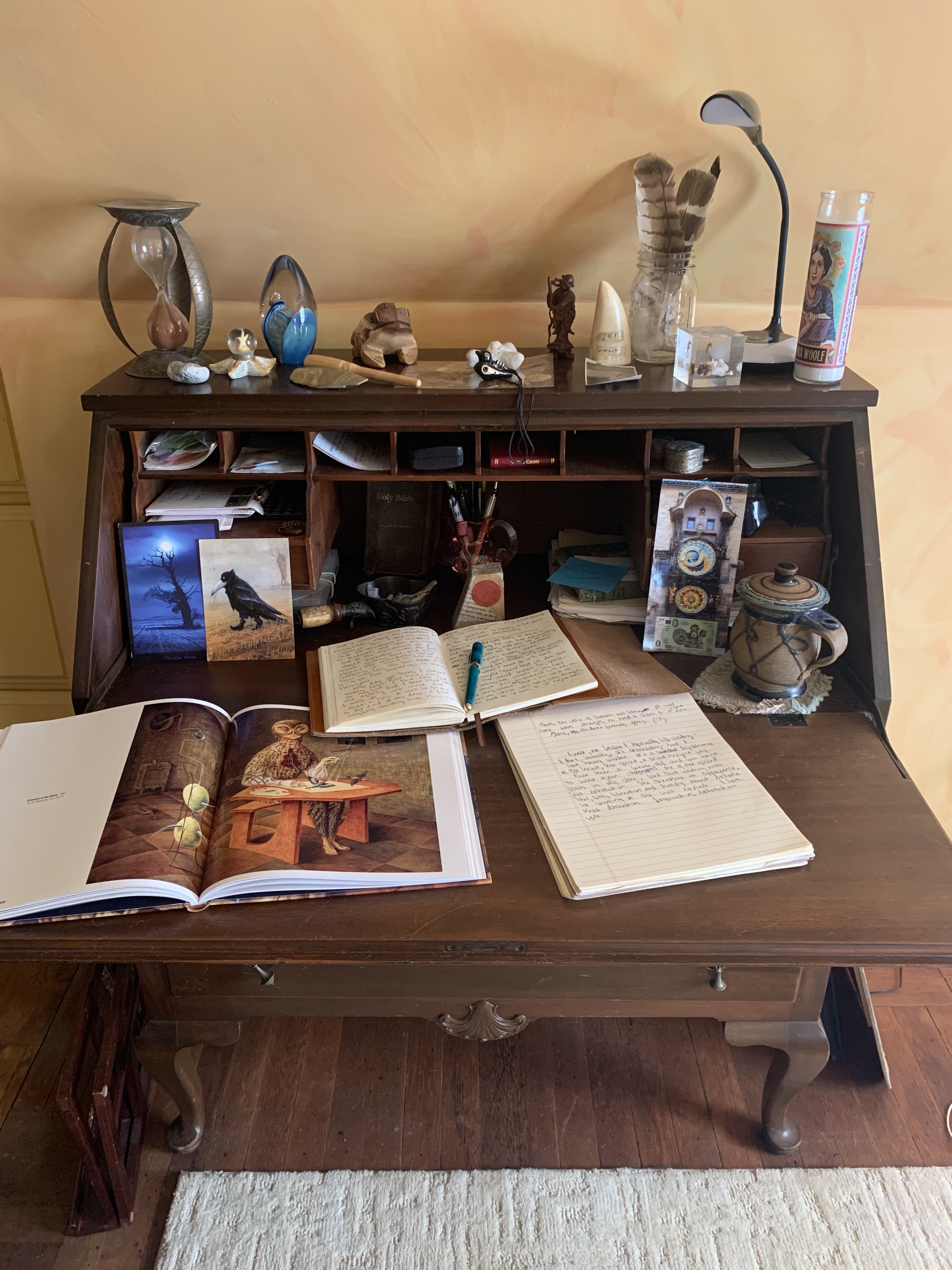
The Magic Desk: In my bedroom/meditation room with a door I can close, a gift from a family friend long ago. It’s an antique secretary desk with a drop front and cubbyholes, like the letter desk. This is where I work on The Tapestry Room, a historical fantasy novel for young readers. Here is the one place in the house I can close the door. If I mindfully cross the threshold into this room, say ‘I am a writer entering a sacred space’, the chatter in my head quiets down. I close the door, take the three steps down in to the room, play the music that is my touchstone and almost immediately the peacocks swish their tails and I can enter the world of the book.
By moving from desk to desk, I can change gears and officially set aside the thoughts that do not belong to that desk. It’s how I trick myself into focusing and mostly it works, helps keep my work separate and clear. It helps to make a little room for the private work of my soul. I write, not because I especially like writing, but because I love having written. It’s a lightening of the heart, the spirit, a secret bright joy. But then that feeling wears off and you have to write again. Patsy Kinser, one of the remarkable poets in my class, said that writing is her exhalation. She breathes in life, loss, love and exhales poetry. I love this. Inspiration, exhalation. Yes.

In her keynote, Adriani (I feel we are on a first name basis now) told us to set our alarms two hours earlier to write, fresh from sleep, before the world starts making demands. She said to create a sacred space for writing, even if it’s just a corner of the kitchen table. A woman after my own heart, she advocates getting dedicated notebooks for projects- no writing the grocery list or the household chore to-do list in the novel notebook. She said ‘Love everybody, take care of everybody, but put yourself on that list too’. Over and over her message was: Don’t waste time, don’t kick that can down the road, you’re feeling pretty good right now- get it down. Don’t. Waste. Time.
Making time to write is very difficult, then actually writing is harder still. The world leans in hard telling us that what’s in our hearts and heads can wait, isn’t important, will never lead anywhere. That’s the voice of Death. It will come soon enough, no need to listen to it right now. Write. Glory.
Filed under: Art of the Day, Uncategorized, Writing | Tags: Hindman Settlement School, pandemic, Writing, Zoom
We have all of us felt it, all of us lucky ones.
We have felt that thing that happens when you cross over the little bridge spanning the creek. The creek. Troublesome Creek.
It’s a homecoming.
Interruptions INTERruptions IntERRUPTIONS
As soon as I almost (almost) get the thoughts into the corral, I’m texted by my daughter who needs me to come downstairs immediately to zoom in with the therapist who is helping her to dig herself up and out of the eating disorder vortex that has sucked her in during the pandemic lockdown. And so I go and just like that my thoughts, feelings and words gallop off in three different directions.
When you cross Troublesome, those interruptions stay home. They have to go to great lengths to track you down.
Troublesome Creek runs through Hindman, the seat of Knott County in the mountains of Eastern Kentucky. It is the home of the Hindman Settlement School, founded in 1902 by May Stone and Katherine Pettit. It was the first rural settlement school in the United states and is one of the few remaining. Its programs have changed over the years, but its mission has not: Honor the past, improve the present, and plan for the future of Central Appalachia. They have dyslexia programs for children, parents and educators, a burgeoning foodways program that is revitalizing agriculture in Appalachia and many cultural heritage programs, one of which is the Appalachian Writers Workshop. For 45 years it has been both incubator and life raft for writers with ties to Appalachia.
The last week in July, we lucky ones get to cross the bridge and spend a week in this place that has been held sacred for generations. Every year I reflect on what it is that transforms a place into sacred ground. It is a collective project undertaken by all who come. Everyone who crosses that bridge is there to teach or learn or to somehow support the work that is being done there. Minds and hearts are bent on exploring, discovering, sharing, expressing, supporting, celebrating. There is tremendous joy in such company. This joy creates a light that shines in the day to reveal hidden paths and glows through the night to heal the soul. It sounds hyperbolic written here, but anyone who has been will tell you that this is so. The busy-ness of our everyday life cannot reach us for a blessed while. Us! What happiness to be an us, to be a we not a me. In this company we do not need to explain or defend ourselves. We do not need to hide.
This Year of the Plagues or Year of the Great Reckoning, Hindman was online.
Enormous collective sigh.
Collective mourning, too, of all that we would lose:
-The rituals of arriving, claiming your bunk, finding your roommates.
-The Welcome lecture that never fails to mention snakes.
-Hugging old friends, catching up in a heartbeat.
-Three delicious meals a day magically appearing just when you need them, eaten in lively togetherness. (Never underestimate how far this goes in setting the muse free)
-Dishwashing duty with old friends and new friends and literary heroes.
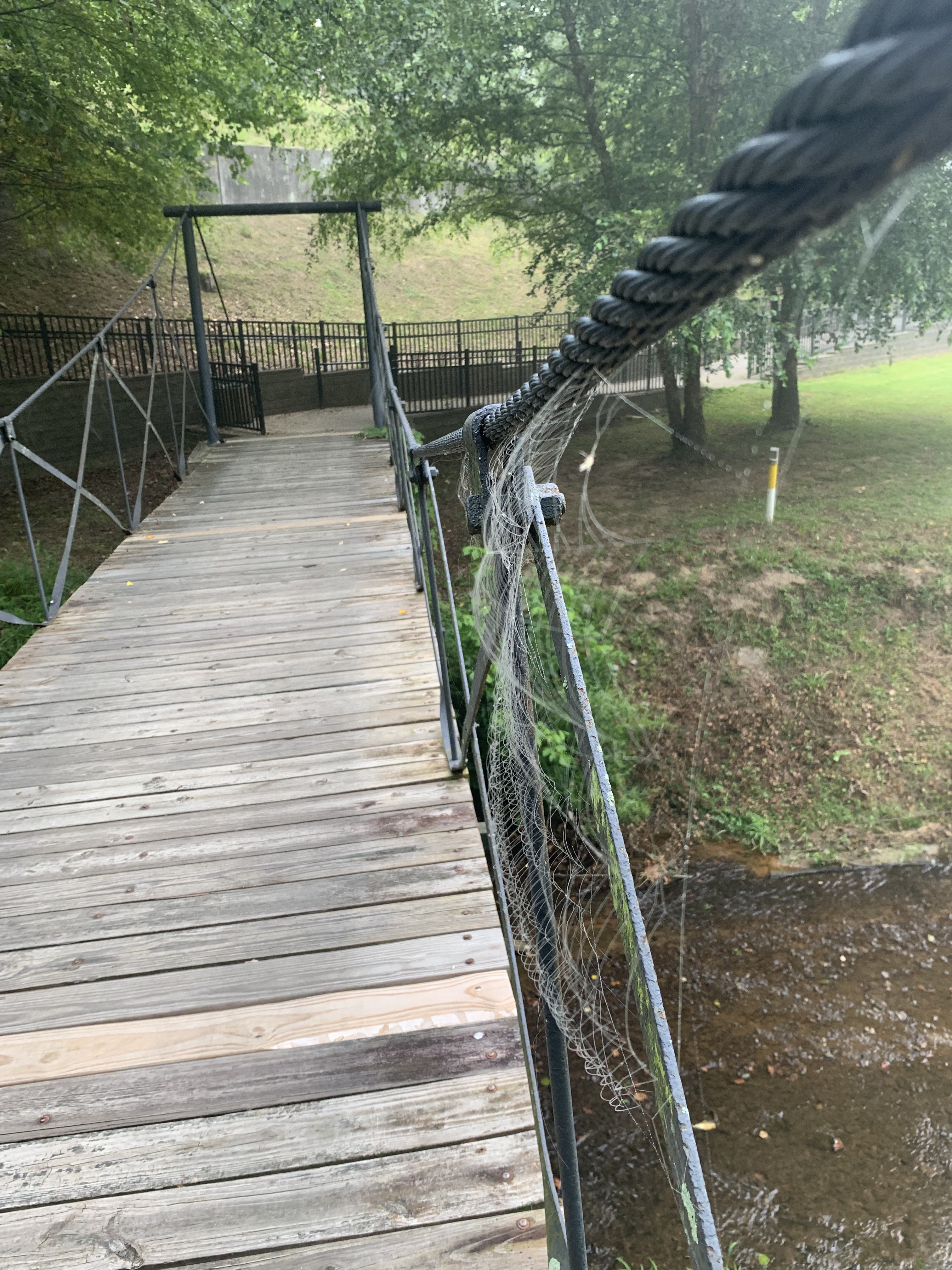
-The sparkle of dew on the morning spider webs spanning the footbridge to class.
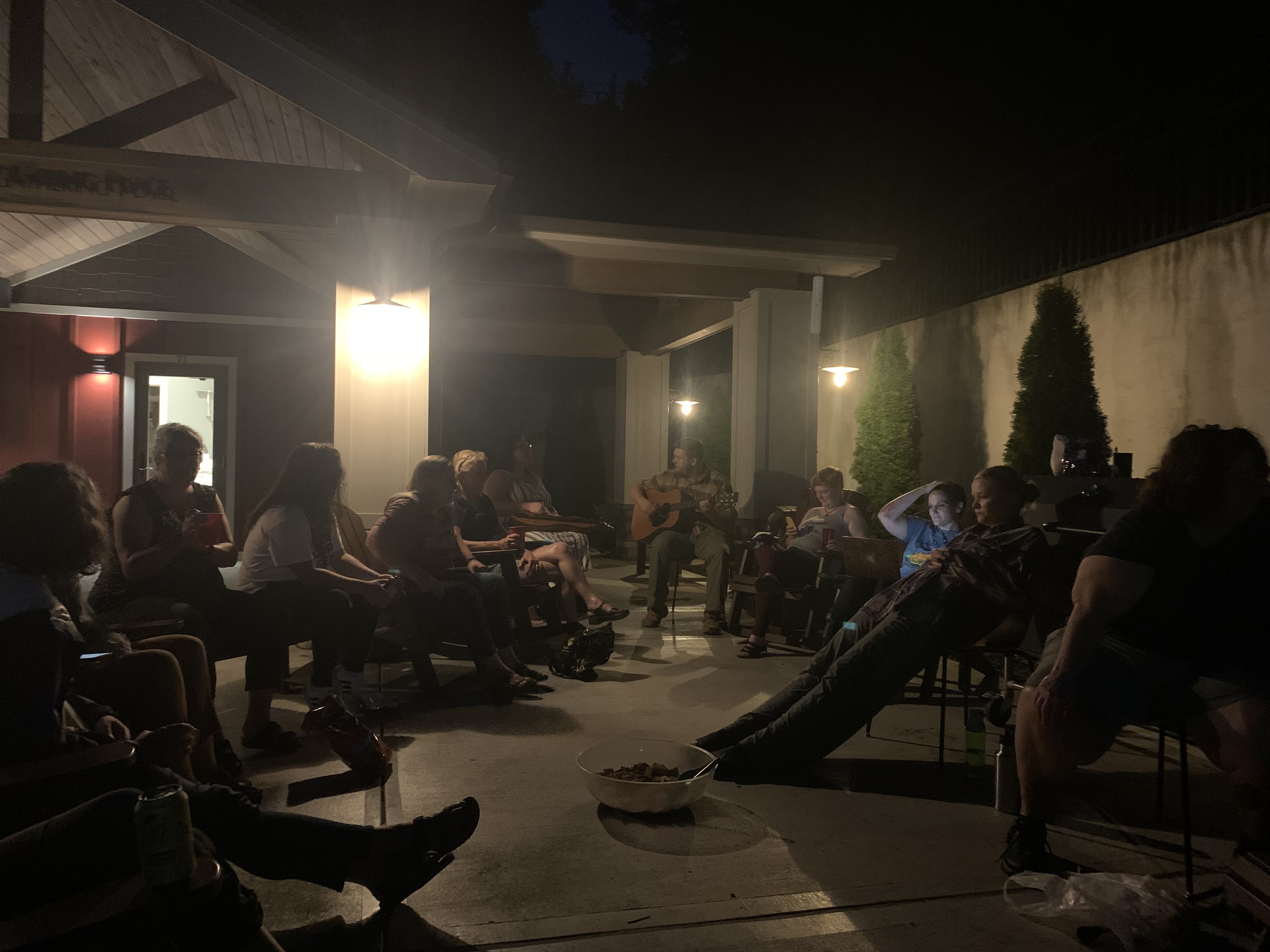
-Staying up late talking in groups, talking in pairs, singing in circles, at the Gathering Place, on porches, up in the open air chapel on the hillside by the graves of James Still and Elizabeth Watts, passing moonshine in jars until far too late.
-Negotiating sleep in the bunkbeds, being reminded of what it is to snore.
-The revelation of the participants readings, hearing a poem by your new dishwashing friend that makes you gasp, then cry, then laugh again, leaving you full of wonder.
-Laughing at Robert Gipe’s masterful introductions in the evening readings, performance events unto themselves.
-More revelations as the instructors read their work. Damn, they can write, words so evocative and well-aimed that they can split a tree in two.
-Feeling that time has stopped as you sit in your workshop class, finding facets in your own work you didn’t know were there, like that reoccurring dream you have of finding new skylit rooms in your house.
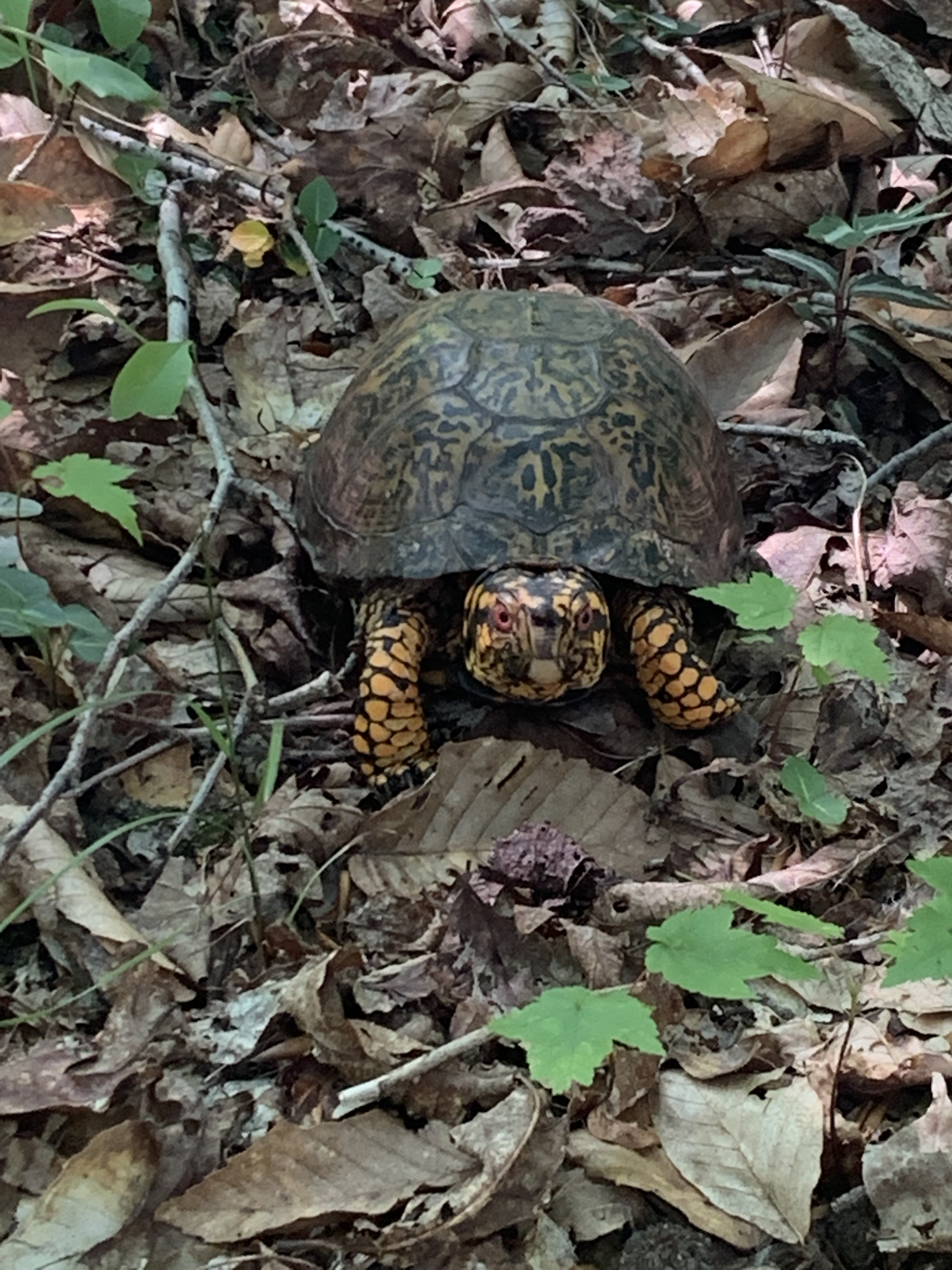
-Hiking the loop up behind the highest cabin, looking for the box turtles that always tell you the same thing: you already have everything you need. Just write.
-Listening to the keynote speaker after an unforgettable Appalachian feast. Such as Nikki Giovanni beginning her talk with “The penis is in trouble y’all”. And the glory of Dorothy Allison’s thunder and lightning, her gentle rain and the sun coming out, her benediction shooting us from the cannon: ‘Now get the fuck out of here and write!’
-Partaking of holy communion in the ritual reading of Jim Wayne Miller’s “The Brier Sermon”, a poem that exhorts us: ‘You must be born again`.
And we are, every year.
We wondered, I wondered, each of us wondered- would any of this survive the 2020 Pandemic edition?
I had my doubts. For one thing, there would be no journey. There wouldn’t be planning, packing, securing the household for my absence, loading up the car and pulling away. There wouldn’t be the long drive from the flatlands, to rolling farms, to foothills and off the highway into the mountains. I wouldn’t see my cell service come and go, pass the signs for Frozen, Typo, Flat, Mary, Dice, Pigeonroost, Rowdy and Dwarf. I wouldn’t rejoice when I finally get WMMT on the dial, wouldn’t feel my heart quicken when I got to Hazard, frown and shake my head as I passed the Lost Mountain, smile the rest of the way up the Daniel Boone Parkway, still refusing to call it Hal Rogers, positively sing as I take that turn past Yoder’s, down the big hill into Hindman, turning left onto the James Still Highway at the Midee Mart and right again over the bridge spanning Troublesome. And there I am, looking for a parking space and scanning the porch at May Stone- who is already sitting there rocking away, waving as the cars pull in?
Clicking on a Zoom link is a poor substitute.

And yet- it was there after all. The Hindman Heart. I felt it pounding as I clicked on the links. My friends and teachers were there and new folks too. Their talent and courage and generosity touched me even as I sat curled up in the armchair by the writing window with my cat Dr. Wilson. We had our classes, the daily participants readings, the evening readings. We had nightly Zoom hangouts with conversation and music, the evening beverage of your choice. My young friend Clayton started a Zoom breakfast club that quite frankly was the highlight of the week for me, coming closest to the pleasure of sitting down and sharing a meal together. I hadn’t realized how much I needed company. We even had suggested attire for each day- formal wear one day, western wear the next and so on until we had a bona fide spirit week. Again, I hadn’t realized how much I needed play.
For the first time this year, Zoom felt homey to me, a comfort. This is miraculous, because after teaching online all spring and having my second job online as well, I have come close to flinging my small screen overseer into the fish pond on many occasions. Sure there are ways that the virtual workshop might be improved if, god forbid, it has to be online again next year, but the school did an amazing thing in building a platform that could support the spirit of the workshop in this grand online experiment. We even managed a reading of The Brier Sermon.
“They say people can go blind gradually.
They say people can go deaf gradually.
Lose the sense of taste little by little.
They forget the shapes of leaves on trees,
forget the sound of the creek running,
the world just blurs, grows silent.
They forget the taste of coffee and all their food.
Now what would it be like if that sight were given back?
If they heard the creek running again, or a crow call?
If suddenly they could taste their food again?
Something is restored to them, a richness.
They’ve found something they didn’t even know they’d lost.
They’re born again to sights and sounds and tastes.
Oh, you must be born again.”
Were we born again? Here I leave the we and go back to just me.
Rebirth? No. But I have been given enough gas to get to the nearest service station. And I am learning how to create the space my own work requires so that I don’t lose my mind once and for all. Some folks were able to go off and get a hotel room or arrange things so that they had utter privacy as they engaged in the virtual workshop, others continued to work and fulfill family obligations while attending, most tried some sort of compromise between the two. When the children hollered ‘Mom! The dogs got into the garbage and it’s all over the house and they’re throwing up everywhere’, they hollered back down the stairs ‘I’m not here, I’m at Hindman!’ Those people are my heroes. But damn it’s hard to set those boundaries. For me there is tremendous mental resistance and guilt. I’m up against my own fundamental belief that my work is not nearly so important as working the jobs that pay the bills and tending to those I love.
If I don’t fight for the time, I won’t get it. No one else is going to hold that sacred space for me the way Hindman does one week out of the year. I have to hold it sacred myself.
At the beginning of the summer all sorts of little IED’s exploded in my road. Exhausted and depressed from the online school semester, there was the discovery that my daughter had successfully hidden the resurgence of her eating disorder, the failure of a class at college and the subsequent loss of financial aid for the coming year. She was in big trouble, all hands on deck. Weeks were spent wrangling her back into an Intensive Outpatient Program, having to play the villain to get her to eat again, and appealing the financial aid decision based on her learning differences, the pandemic and her mental health. Then there was the pain I felt in not being able to help my mother and her own pandemic isolation because I was spending so much time putting out the fires at my house. I watched my plans for writing retreat further and further down the calendar.
One night in mid-June, I felt particularly low. To distract and amuse myself, I pulled up the Randonautica app, an oracle adventure designed by quantum physicists. Set an intention, (you don’t enter it, you just think it), keep this in mind as you click on the app requesting a destination that is generated through random quantum calculations that I cannot even begin to understand. I have had remarkable experiences doing this, the interconnectedness of thought and manifestation on full display. My intention: Giving myself permission to write. I got a location that took me to this newish house on Rudy Lane, not far from my mother where I had spent the evening. It was a large house that appeared to be empty. I pulled into the circular drive but felt like I was trespassing, so I pulled out again, drove a little ways off and stopped the car to write my report in the app as being not meaningful. You win some, you lose some. I wrote ‘Just an empty house, maybe I’m missing something’. I decided to ask for a second location, I used my same intention with a great deal more mental intensity “to give myself permission to write, to make the space for it without guilt”. It seemed to take longer than usual to get a destination point. Then there it was- the exact same location I was given before. This had never happened before. I was stunned. Clearly I had missed something.
I did a quick search to confirm that the house was indeed empty- it had been sold only three days before. I went back, parked the car and went to the back of the house where the destination beacon blinked. There was a creek running right behind the house with steep banks shored up in places by caged rock to fight the erosion. The creek was nearly dry, (leap minnow, leap), but evidence was everywhere that it could be wild. It could be, well, troublesome. Of course. That’s where I give myself permission to write. That’s where I give myself permission to think only of myself. It was very green behind that house, thickly shaded by trees on the banks, the light beautiful as it faded. I quite forgot that I was in the middle of Louisville. There was a soggy deck off the back of the house that looked right over the creek. I walked up on it and then saw that there was a wooden footbridge across the creek, where the property expanded into an open field. I crossed the bridge. Permission to write. I need to cross Troublesome Creek here at home.
And that is what I am learning to do. It’s a struggle to override decades of programming. The virtual week at Hindman has given me the fuel to power on. I must cross Troublesome Creek for a time every day, speaking firmly into my own ear- You have nothing to feel guilty about, nothing to fear. Waste and lose no more time, poet. You must be born again.
Filed under: Art of the Day, Writing | Tags: Appalachian, Hindman Settlement School
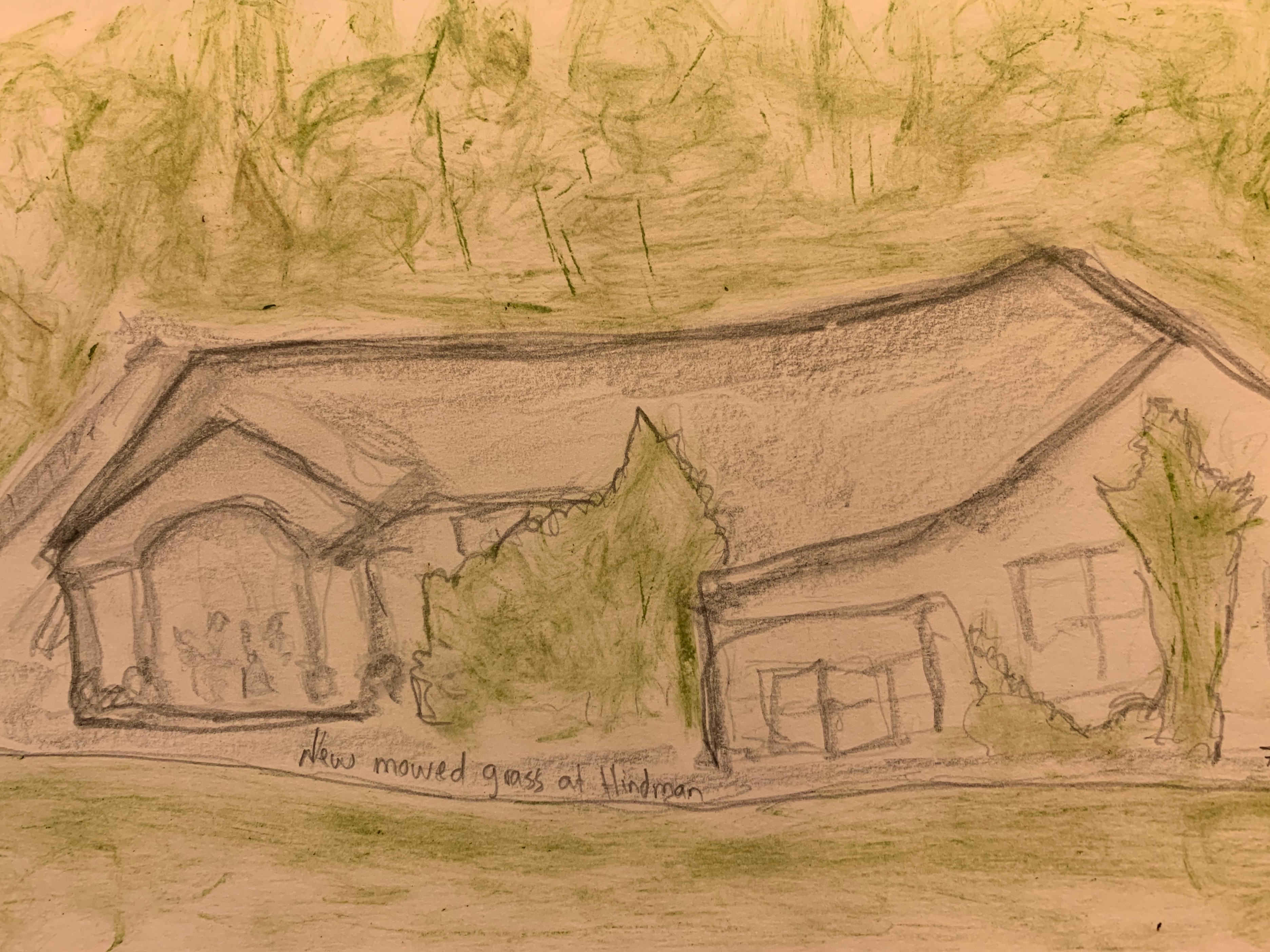
Hindman. All of us are mourning the end of the week, all of us are facing the return home. So it seems from the social media posts and the sudden rush of friend and follow requests I’ve gotten. We are sorry to leave with good reason. It is a holy place, a place where one feels whole. So many people have passed through there or have settled and made lives there, and all of them have had one ambition- to become better. To learn. To teach. To grow. Teachers, students, artists, musicians, writers, historians, activists- a hundred and seventeen years of people finding their voice and losing their fear to make it heard. The old cabins, the new buildings, the paths, the hills, the trees, the beloved footbridge over Troublesome Creek – the place is soaked in spirit and we are thirsty for it.
But it is also us. I am using the plural pronoun because when I go to Hindman I become part of we. We come to know each other quickly, outside of the context of the roles we play in our families, outside of where we live, how we live, the jobs we do in the world. We know each other through our writing, our soul’s desire to come to terms with life, made manifest on the page. We share meals (never underestimate the power of three well-cooked meals served punctually in the life of a writer), we share sleeping quarters, we walk to class together, discuss our work there, listen to readings of other people’s work, we sing, stay up all hours swapping stories and do it again the next day. We find that for at least one glorious week, our work matters. And that is what we want to hold fast to, that is what I want to defend from the demands of my workaday life. We are all sorry to leave that place, but grateful, oh so grateful to know it is there.
On Friday night, Dorothy Allison (oh my god, oh my god in heaven, Dorothy Allison) sent us off with this benediction: “Now get the fuck out of here and go shout!”